How Google Live Traffic Data Is Changing Demand-Response Operations

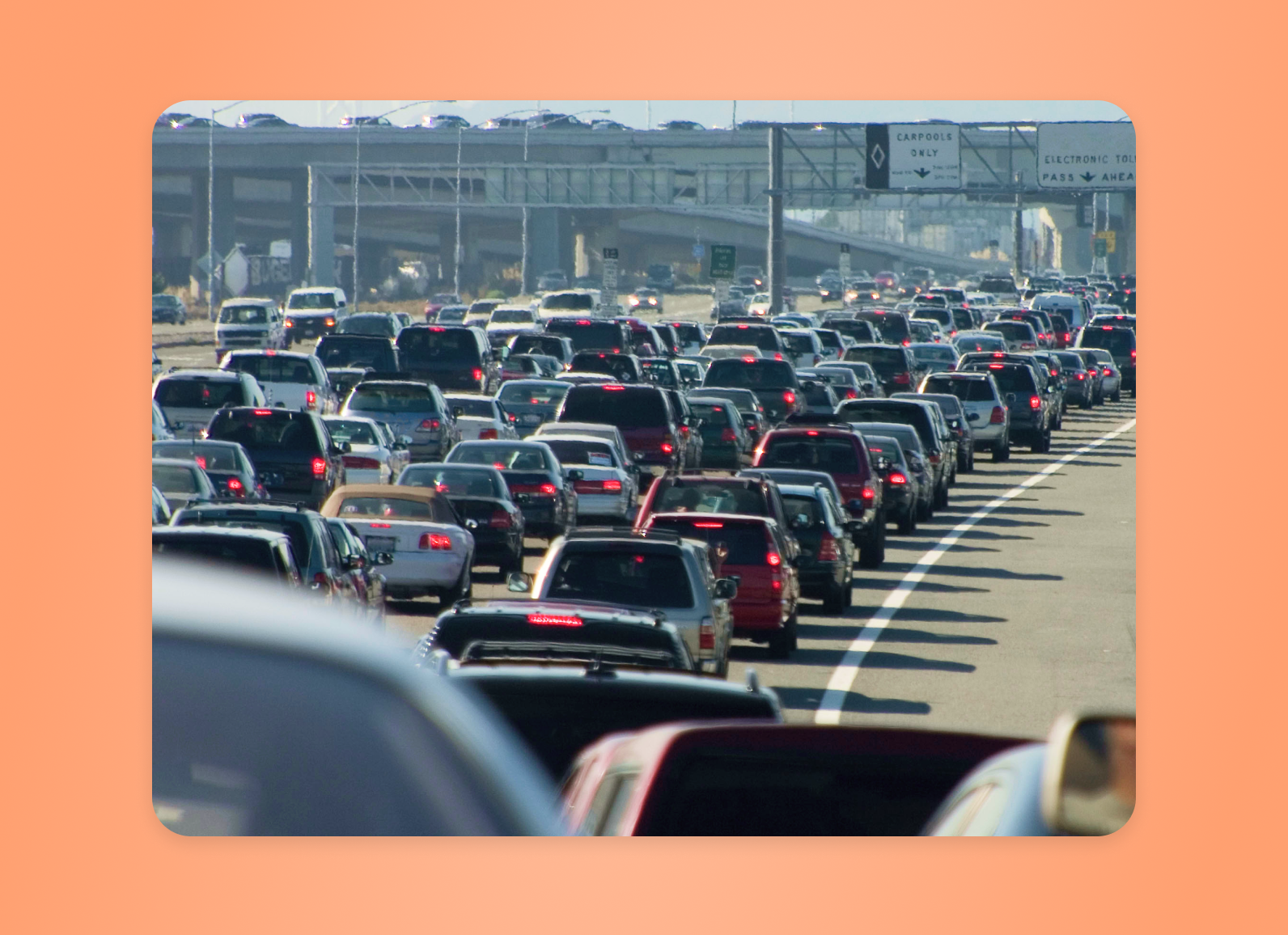
Traffic has always been the variable agencies can’t control.
You can plan the perfect schedule the night before. But by morning, there’s a collision on a main route, construction on the bridge, and a school pickup blocking a key turn. Suddenly the plan doesn’t match reality and dispatch is back to juggling calls.
Live traffic data changes that.
Spare has always adapted manifests throughout the day to reduce lateness, improve rider experience, and keep routes efficient. But now, with Google Live Traffic integration, the system does this even better because it understands exactly what's happening on the roads in real time.
Agencies with this integration are seeing up to a 20% reduction in late trips. It’s the difference between constant firefighting from dispatchers, and operations that run themselves.
Real results with STAR Transit
STAR Transit, a microtransit agency in Terrell, Texas that’s powered by Spare, offers a clear example of what this looks like in practice. Two months after enabling Google Live Traffic in September 2025, the agency saw measurable improvements across every key metric, even while managing significant ridership growth.
The numbers are clear, OTP improved from 90.3% to 92.3%, meaning hundreds of pickups that would have been late arrived on time. Dedicated fleet productivity jumped 18%, from 1.93 to 2.27 boardings per vehicle hour, while handling a 23% increase in volume.
STAR Transit's ridership grew 69% between late August and early November (from 2,007 to 3,383 weekly trips). During that same period, they improved reliability and efficiency. Vehicle hours increased only 13%, far below the ridership growth, proving they're doing more with what they have.
From static planning to continuous adjustment
Most systems plan routes once, usually the night before or early morning, based on historical averages. Then reality intervenes. Traffic backs up. Construction appears. Drivers pull over to check their phones or call dispatch for guidance.
By the time you know there's a problem, the rider experience is already affected.
Spare's optimization engine has always recalculated routes throughout the day to handle changes. What's different now is that these recalculations happen with real-time traffic awareness. When congestion or incidents occur, the system knows immediately and adjusts accordingly.
What changes when traffic data becomes real-time
The system evaluates every active trip every minute. Not based on yesterday's traffic patterns, but on what's actually happening right now and these adjustments happen automatically. Drivers get updated navigation. Dispatch sees the changes. Riders stay on schedule. No phone calls required.
Responsive systems vs. reactive operations
Reactive operations respond to problems after they occur. Responsive systems adapt as conditions change, often before problems reach riders.
In a reactive system, if a driver hits unexpected traffic, they call dispatch. The dispatcher checks conditions, makes a judgment call, and manually updates the manifest. By then, the first rider had been waiting longer than expected.
With live traffic integration, the system detects the slowdown immediately and recalculates. Routes update automatically as conditions change, with drivers receiving new navigation instructions seamlessly. The rider gets picked up on time, without dispatch intervention.
When Drivers Finally Trust Their Routes
There's a hidden cost in operations where the routing system doesn't see what drivers see. Your drivers navigate actual traffic while the system works from yesterday's assumptions. Over time, they learn the system can't be trusted. They override it, improvise, or call dispatch because following the assigned route doesn't make sense anymore.
Live traffic integration fixes this disconnect. The system sees the same conditions drivers see and makes decisions based on that shared reality. It determines the right pickup and drop-off points (like accessible entrances and safe stopping locations for larger vehicles), not just the fastest path between them.
When a driver's navigation suggests a reroute around traffic, it's because the system has already evaluated that change against every other active trip and determined it's the right move.
How Spare's Google Live Traffic Integration Works
Spare has built the industry's only true end-to-end integration of Google Live Traffic directly into demand-response operations. This isn't traffic data displayed on a dashboard or a link to an external navigation app. It's live traffic flowing continuously into the optimization engine and back out to drivers through native Google Maps navigation.
Here's what makes this integration different:
- Live traffic powers the routing brain. Google's real-time traffic data feeds directly into Spare's optimization engine, updating travel time predictions every minute. If there's an accident ahead, sudden congestion, or a road closure, the system automatically routes drivers around it without requiring dispatch to intervene.
- One system, one source of truth. Drivers see Google Maps navigation built directly into the Driver App. They use familiar turn-by-turn navigation powered by Google’s Navigation SDK, including real-time traffic awareness and road speed limits, without switching apps mid-route. When the optimization engine recalculates a route based on current traffic, that change flows instantly to the driver's navigation. There's no disconnect, no app-switching, no conflicting information between what dispatch planned and what the driver sees.
- Continuous adaptation replaces static planning. Instead of routing trips at 6 AM and hoping conditions hold, Spare evaluates every active trip every minute. Behind the scenes, the AI-driven optimization engine uses Google Routes to continuously update travel times and routing decisions in real time. This matters in demand-response because the system isn't optimizing a single trip, it's coordinating across multiple locations at once.
This level of integration, where routing algorithms, live traffic data, and driver navigation function as a unified system, is what enables the real operational transformation.
The impact agencies are seeing
When traffic becomes an operational input, not just a map layer, reliability becomes built into the system. Agencies can cut late pickups without adding dispatch workload, run tighter schedules with less padding, and scale service without scaling staff. Performance stops depending on manual interventions and starts relying on automation that adapts in real time as conditions change.
But the deeper changes show up in how operations actually feel day-to-day
- Teams operate with less stress. When the system adapts automatically to traffic changes, dispatchers and drivers stop carrying the constant burden of "what else might go wrong that I need to fix." That reduced mental load shows up in retention, job satisfaction, and overall team morale..
- Efficiency compounds. Drivers trust their routes and stop improvising. Dispatchers stop firefighting and start improving service. Riders experience reliability that builds confidence. Each improvement reinforces the others, creating an upward cycle instead of daily crisis management.
- Operations scale sustainably. Agencies handle increased complexity (more trips, larger service areas, tighter windows) without proportionally increasing staff. The Google Live Traffic integration gives systems the ability to scale in ways manual processes simply can't match.
What this means for operations
Live traffic integration doesn't bridge the gap between planning and reality, it closes it. When your routing system knows what's happening on the roads right now and acts on that knowledge automatically, operations fundamentally change.
Your riders already expect this reliability. They experience it with every other navigation dependent service. The question is whether you'll make this transition on your timeline or be forced into it by rising expectations and competitive pressure.


From the blog
.png)


“Once we unified dedicated vehicles and TNCs on a single platform, the experience changed immediately for riders. They could see their trip in real time, understand their fare, and know what to expect. From a staff perspective, it eliminated confusion and allowed us to focus on service instead of troubleshooting.”