What’s New in Spare this Fall, and How Your Agency Can Help Shape Spare AI


A rider calls to ask why their pickup was late. A dispatcher needs to update dozens of trips after a service change. An operations manager is trying to understand why a vehicle started its duty behind schedule.
These are everyday situations in transit operations, but getting answers or making changes can take more time than they should.
Staff often need to move between screens, check multiple records, or manually repeat the same steps. When the information they need sits in different systems, even a straightforward question can turn into a lengthy investigation.
With Spare’s Fall 2026 release, Scout, our AI copilot, adds four new capabilities that help agencies spend less time on those tasks.
From preparing bulk changes to investigating service delays, Scout gives the people running transit operations more ways to get through routine work. These updates are also early steps toward Spare AI, which we’re building to bring together more of an agency’s operational data, knowledge, and workflows.
Here’s what’s new, how agencies can put these capabilities to work, and how they can help shape what comes next from Spare AI.
Where Scout fits in Spare AI
Scout is the AI copilot built into Spare, and it’s the part of Spare AI your team can use today. Since the Summer release, staff can open it from the pages where they’re already working to ask questions about their operational data. Spare AI is the broader platform we’re building: it connects an agency’s data, knowledge, and workflows so staff can work across more of their systems.
Get more done with Scout
Scout helps transit staff find information and work with their operational data by asking questions in plain language.
Instead of navigating multiple reports or manually searching through records, users can ask Scout for the information they need directly within Spare.
This fall, we’ve expanded what Scout can do.
Staff can now use it to prepare changes across multiple records, work with uploaded files, understand how their agency’s configuration affects operations, and investigate delays using maintenance information from Spare’s Enterprise Asset Management (EAM) product.

Together, these improvements show the value of having operational information connected in one place. Agencies using Spare Demand Response and EAM can already bring scheduling, dispatch, and maintenance information into the same conversation with Scout, without adding another tool to their team’s day.
What's new in Scout this fall
1. Make bulk changes without updating every trip individually
A service disruption, scheduling adjustment, or operational change can leave dispatchers with dozens of records to update. Making those changes one by one takes time, particularly when staff are already managing live service.
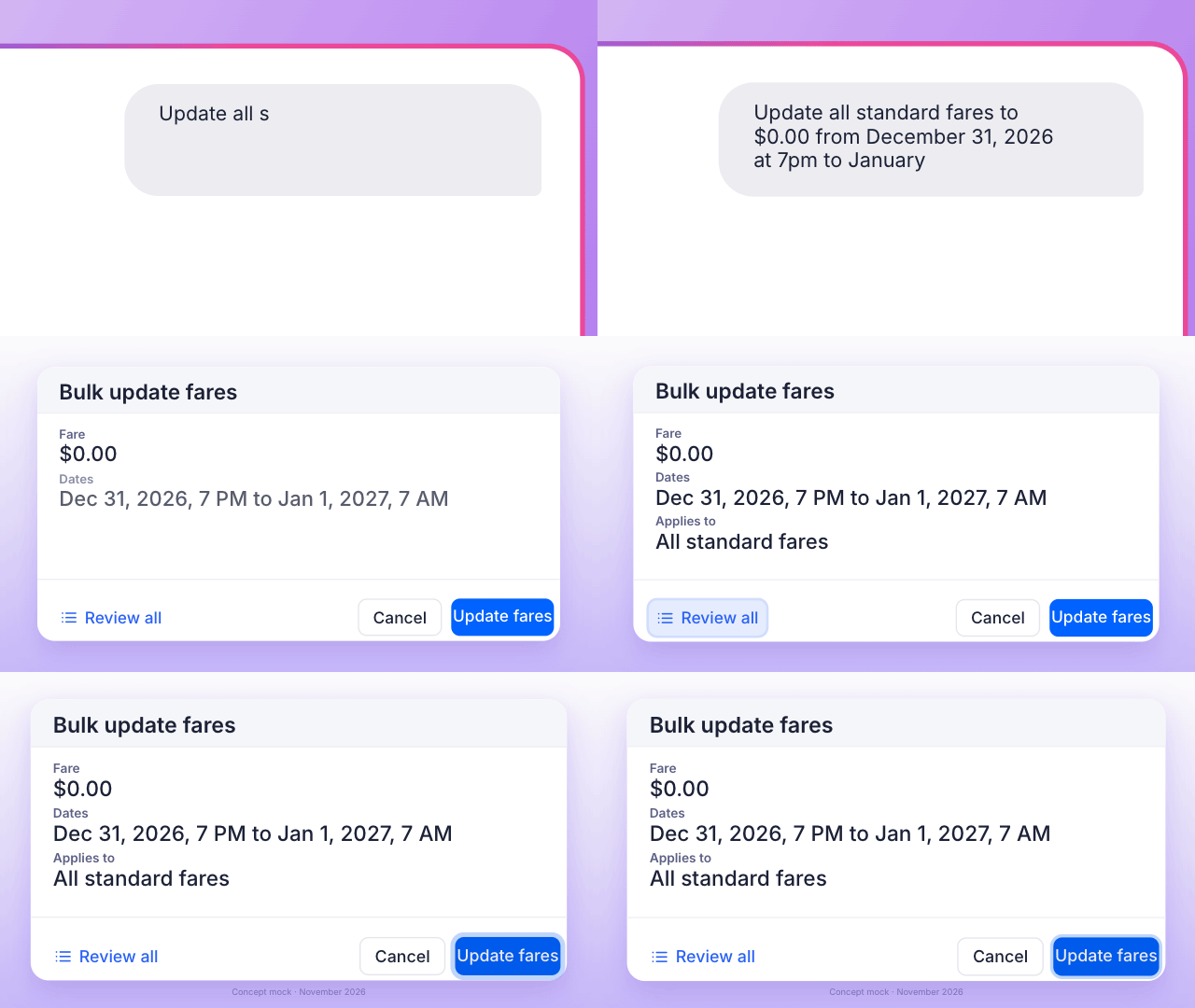
With Scout’s new bulk actions, users can describe the changes they need in plain language and Scout prepares the updates for review across multiple trips or records.
For example, a dispatcher transit agency can tell Scout, “Make all fares free on New Year’s Eve.” Scout prepares the fare changes and shows them for staff to review and approve before anything is applied, so staff don’t update each fare by hand.
What this means for dispatchers
Bulk actions are designed to cut down the time staff spend on repetitive updates, especially during busy periods when operational changes need to happen quickly.
That can free dispatchers to spend more time monitoring service, responding to riders, and managing exceptions. And because staff approve changes before they’re applied, agencies can introduce AI assistance without giving up oversight of their operations.
2. Bring spreadsheets and documents into Spare
Duty schedules might arrive in spreadsheets, operational reports may be saved as PDFs, and important details are sometimes captured in images or documents. Getting that information into the right system often means manually copying, reformatting, or recreating it.
With the Fall release, you can upload PDFs, images, and spreadsheets to Scout and ask it to turn them into reports or help import the data.
For example, a scheduling team can upload a duty schedule prepared outside the platform and ask Scout to help import it, rather than manually rebuilding the information. Users review the results before putting them to use.

What this means for scheduling and reporting teams
Agencies already have processes, spreadsheets, and documents their teams rely on. Bringing that information into Spare without rebuilding it means less time spent copying and reformatting information manually.
3. Get answers about how Spare works for your agency
Every transit agency configures its service differently.
Booking rules, operating hours, service areas, and other settings affect how trips are scheduled and managed. When something unexpected happens, staff need to understand not just how the software works generally, but how it’s configured for their agency.
Scout can now help answer those questions using the agency’s own settings and configuration.
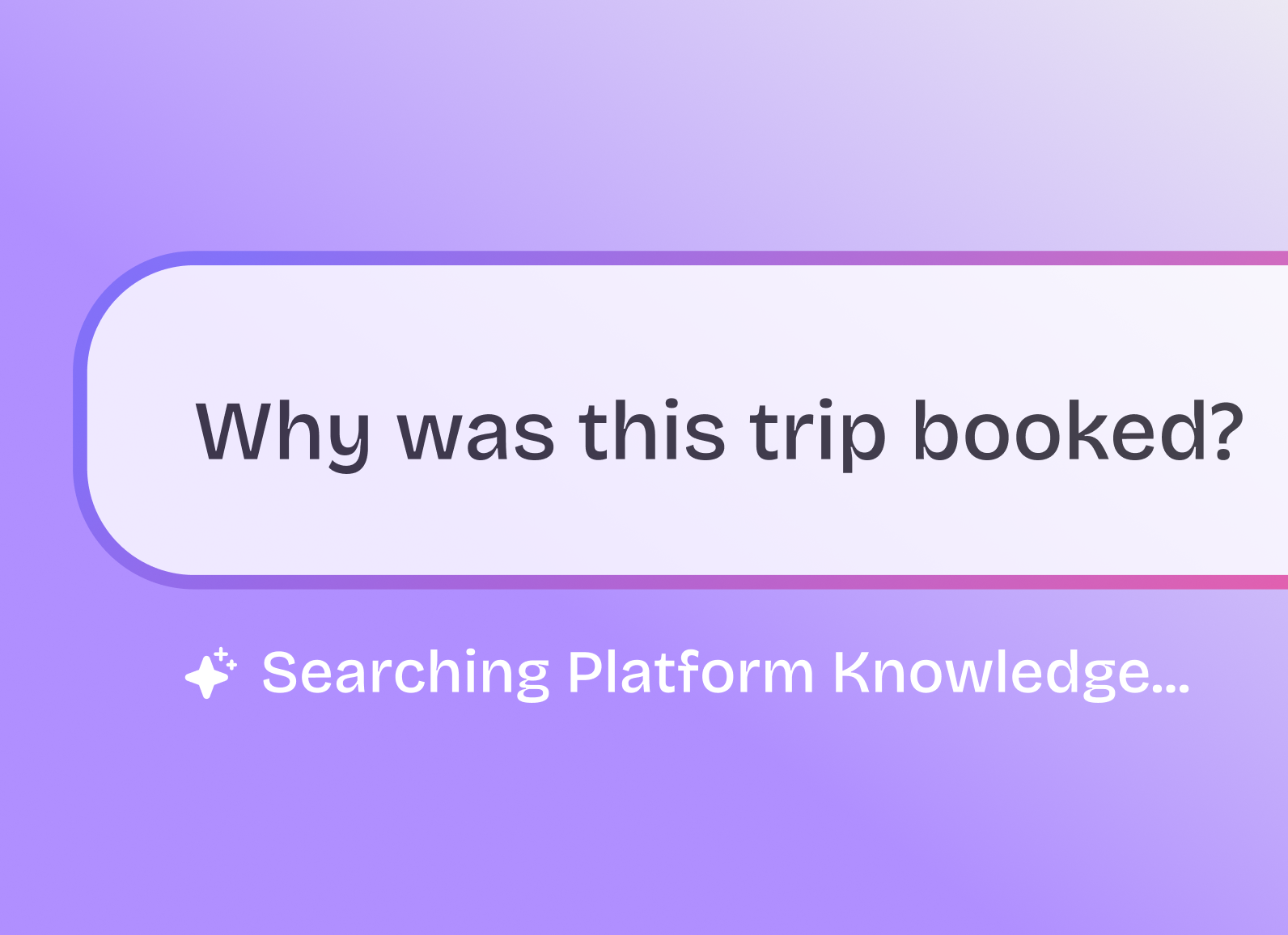
For example, a staff member might ask: “Why did AI Voice book this trip?”
Scout draws on the agency’s configuration to help explain the booking decision, so staff can understand what happened without manually checking multiple settings. This capability is available to all users with Scout enabled.

What this means for operations teams
Operations teams shouldn’t need to contact a system administrator or submit a support request every time they have a question about how a feature works.
Giving staff access to configuration-specific answers can help them resolve questions sooner and get comfortable with the platform. It’s also useful when onboarding new employees, introducing new services, or adopting additional Spare products.
When AI Voice is part of the service, staff can better understand how it’s operating within the agency’s service rules, making it easier to investigate questions and explain booking decisions.
4. Check whether a vehicle issue contributed to a late pickup
When a rider is picked up late, the trip record only tells part of the story.
Imagine a rider was picked up 10 minutes behind schedule. The dispatcher checks the trip and sees that the driver started their duty 10 minutes late. That explains when the delay started, but not necessarily why.
What if the vehicle failed its morning inspection? What if a maintenance issue prevented it from leaving the depot on time?
Without access to maintenance information, the operations team may never identify the underlying issue. With this release, Scout can bring maintenance information into lateness investigations for Demand Response agencies using Spare EAM.
That includes failed inspections, maintenance status, and vehicle fault codes. Instead of investigating the trip and vehicle separately, staff can use Scout to see whether a maintenance issue may have contributed to the delay.

What this means for operations managers
Understanding the cause of a delay is the first step toward preventing it from happening again. If an agency repeatedly experiences late pullouts because vehicles aren’t ready for service, adjusting trip schedules alone won’t solve the problem.
When scheduling, dispatch, and maintenance information sit on the same platform, Scout can help teams spot issues that might otherwise go unnoticed. That gives operations staff a better chance of understanding what went wrong and addressing the cause, instead of working around a problem that keeps coming back.
AI assistance that keeps your team in control
AI can help transit teams work more efficiently, but agencies still need to know what’s happening and have control over important decisions. That’s particularly important when changes affect rider trips, driver schedules, or daily service delivery.
The new Scout capabilities are designed to support staff rather than make operational decisions without their involvement.
When Scout prepares bulk updates, staff review and approve the proposed changes before they’re applied. When Scout processes an uploaded file, users check the results before incorporating that information into their work.

When Scout helps investigate a late pickup or explain a booking decision, it gives staff more information to work with., and the person responsible for the service makes the call. Agencies remain responsible for determining appropriate access, approval requirements, and how AI fits into their operational processes.
What's next for Spare AI?
Agencies also manage vehicle maintenance, rider communications, customer complaints, reporting, finances, and staff operations. The information needed to understand a problem is often spread across several systems.
Consider the earlier example of a late pickup.
Today, Scout can help an agency using Spare Demand Response and EAM investigate whether a maintenance issue contributed to that delay.
But what if the agency could also connect that information with a rider complaint, previous service history, and relevant operational procedures?
Instead of searching through multiple systems, a manager could ask: “Why was this rider picked up late, and what can we do to prevent it from happening again?”
That’s the direction we’re working toward with Spare AI.
Scout is the part of Spare AI available today. Spare AI is being built to connect information across more of an agency’s systems, data, and organizational knowledge. The goal is to make it easier for staff to answer questions that currently require information from multiple departments and, over time, help them work through more complex workflows. It’s being built with a cohort of founding agencies of different sizes, so the use cases reflect how transit agencies actually operate.
For agencies, that could mean less time spent compiling information for investigations, fewer manual handoffs between departments, and better visibility into how different parts of their operations affect one another.
It also could mean getting more value from the systems and data they already have.
We’re building toward AI that can provide answers grounded in agency information, show the sources behind those answers, and help staff act on them with the appropriate permissions and approvals in place.
The capabilities introduced this fall are steps toward that future.
Help us build what's next through the Spare AI Founding Agency Program
Every transit agency has different challenges, and the most useful AI capabilities will come from understanding how agencies actually operate.
That’s why we’ve launched the Spare AI Founding Agency Program, giving transit agencies an opportunity to work directly with our team as we develop new AI capabilities.
The program is designed for agencies that want to see how AI could help their teams and have a say in which problems we prioritize.
Founding agencies receive:
- Early access to new AI capabilities, so they can try emerging features before broader availability.
- Direct support from the Spare team, including a white glove onboarding experience.
- Input into the product roadmap, with opportunities to share the workflows and challenges they want AI to address.
- Subsidized AI credits for the first year to help them test and evaluate potential use cases.
For some agencies, the priority might be reducing the administrative work involved in managing daily service. Others may want to improve reporting, make operational information easier to access, or help staff investigate service issues.
Participating agencies can bring those priorities directly to the team building Spare AI. It’s an opportunity to move beyond talking about what AI might do for public transit and start finding where it can make a practical difference.
Learn more about the Founding Agency Program!
Spend less time on manual work and more time running service
The Fall 2026 release gives Scout four new ways to help your team through routine work.
Dispatchers can have Scout prepare changes across multiple trips instead of editing every record individually. Scheduling teams can work with existing files instead of recreating information. Staff can get answers about their agency’s configuration, and operations managers can investigate delays with more context from vehicle maintenance.
These capabilities make everyday work easier and show what’s possible when the technology supporting transit operations is designed to work together.
And through the Founding Agency Program, agencies have an opportunity to help determine what comes next.




“Once we unified dedicated vehicles and TNCs on a single platform, the experience changed immediately for riders. They could see their trip in real time, understand their fare, and know what to expect. From a staff perspective, it eliminated confusion and allowed us to focus on service instead of troubleshooting.”