

Citibus Expands Access Through Flexible Commingled Transit

Commingling opened up access across the board for everybody. Paratransit riders can get to new medical facilities and the general public can reach new job opportunities.

Citibus in Lubbock, Texas faced a challenge that many mid-size agencies across the United States know well: how do you modernize service while maintaining accessibility and reliability for the riders who depend on it most?
Rapid city growth, changing travel patterns, and declining fixed-route ridership during the COVID-19 pandemic pushed Citibus to rethink its service model. Rather than treating paratransit and on-demand transit as separate systems, the agency took a bold approach by commingling both services into a single shared fleet.
The result is a modern, efficient mobility system that expands access, improves operational performance, and strengthens connections across the community.
Today, Citibus operates one of the most advanced commingled microtransit and paratransit systems in the United States, serving hundreds of riders each day through a unified platform.
The challenge facing Citibus
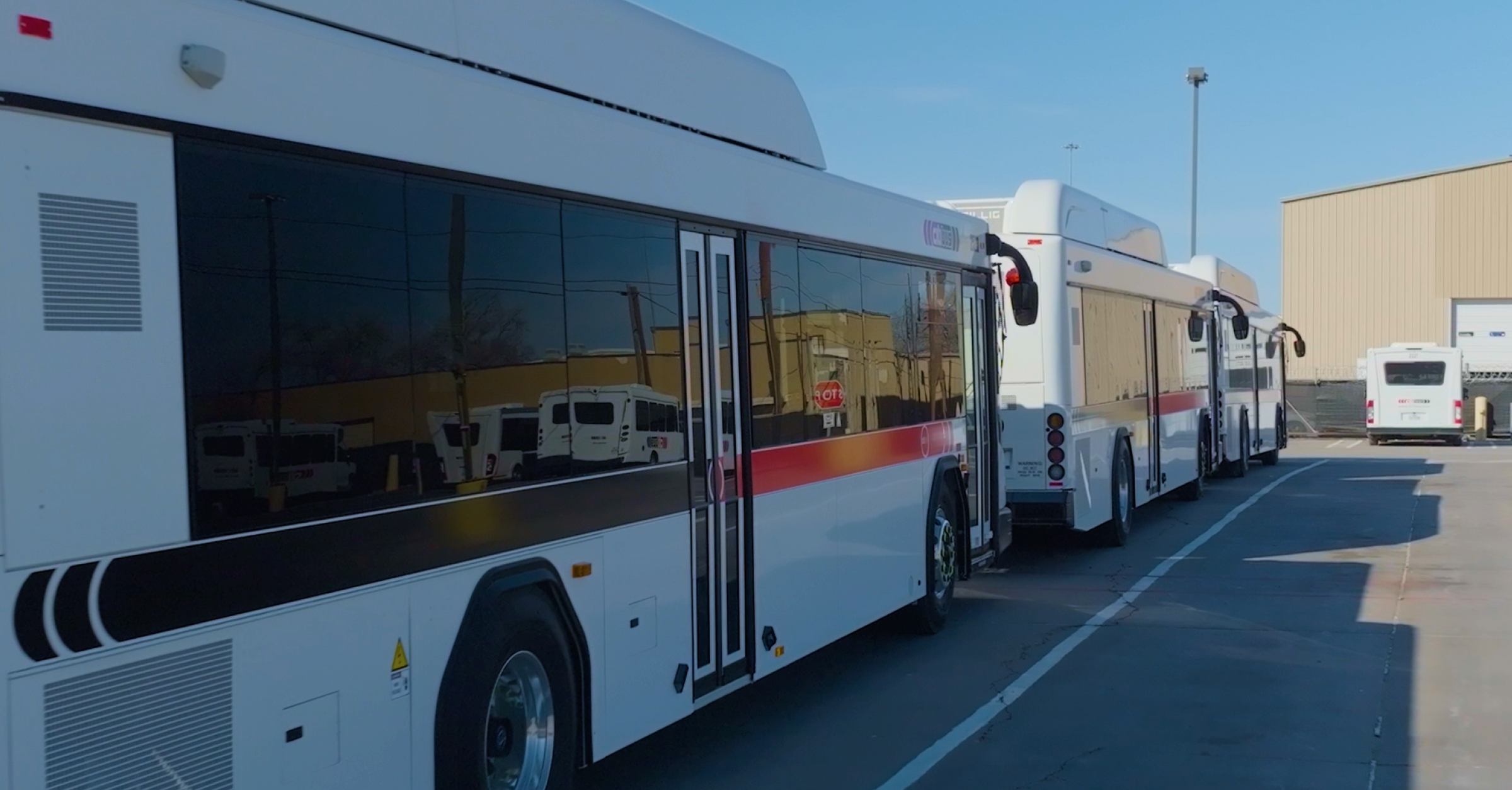
Before modernization, Citibus faced the same operational limitations many transit agencies deal with. As cities grow and evolve, traditional fixed routes can struggle to keep up. Routes that once served key areas may not reach new job centers, medical facilities, or expanding neighborhoods.
Paratransit operations traditionally help fill these gaps, but historically many agencies face operational challenges of their own. For many agencies, trip planning relies heavily on manual planning and legacy software, which wastes time and manpower. Operators often have to manage complicated manifests and routing manually, leaving riders to face long travel times and limited service flexibility, resulting in restricting their mobility.
Drivers are usually responsible for managing complex manifests with multiple pickups and drop-offs while trying to determine the most efficient route themselves. Meeting tight pickup windows added additional pressure, and without modern tools, operators often had to rely on their own knowledge of the city to navigate the day’s schedule.
These challenges became more pronounced as Lubbock continued to expand geographically and economically. Their transit services needed to adapt to reach new and expanding areas that traditional service areas didn’t cover.
Melvin Williams, Assistant Operations Manager at Citibus, recalls the limitations of earlier systems.
“Before COVID hit, we had a software where we didn’t have GPS and the drivers had to figure out the city of Lubbock on their own.”
A new approach to transit by commingling paratransit and microtransit
In May 2020, Citibus launched Citibus On-Demand, a microtransit service designed to complement fixed routes and expand coverage across the growing city. Then, in June of the same year, CitiAccess paratransit was integrated directly into the same service model.
Instead of operating separate fleets and routes, every vehicle now serves both microtransit and paratransit riders within the same trip.
This approach, called commingling, allows Citibus to maximize fleet capacity while keeping service accessible and fair for ADA riders.
Katrina Garcia, Operations Manager at Citibus, explains the shift. “Commingling means grouping our open-to-the-public service with our paratransit service. Allowing the public to ride the van service is the biggest change.”
The system works by prioritizing scheduled ADA trips through advance booking windows while filling remaining capacity with same-day microtransit trips. Vehicles are routed dynamically so riders traveling in similar directions can share trips.
Today, every vehicle duty includes both on-demand and paratransit passengers, allowing Citibus to serve more riders with the same fleet.

Technology that powers smarter operations
To support this new service model, Citibus implemented Spare’s platform to power dispatching, scheduling, and rider tools.
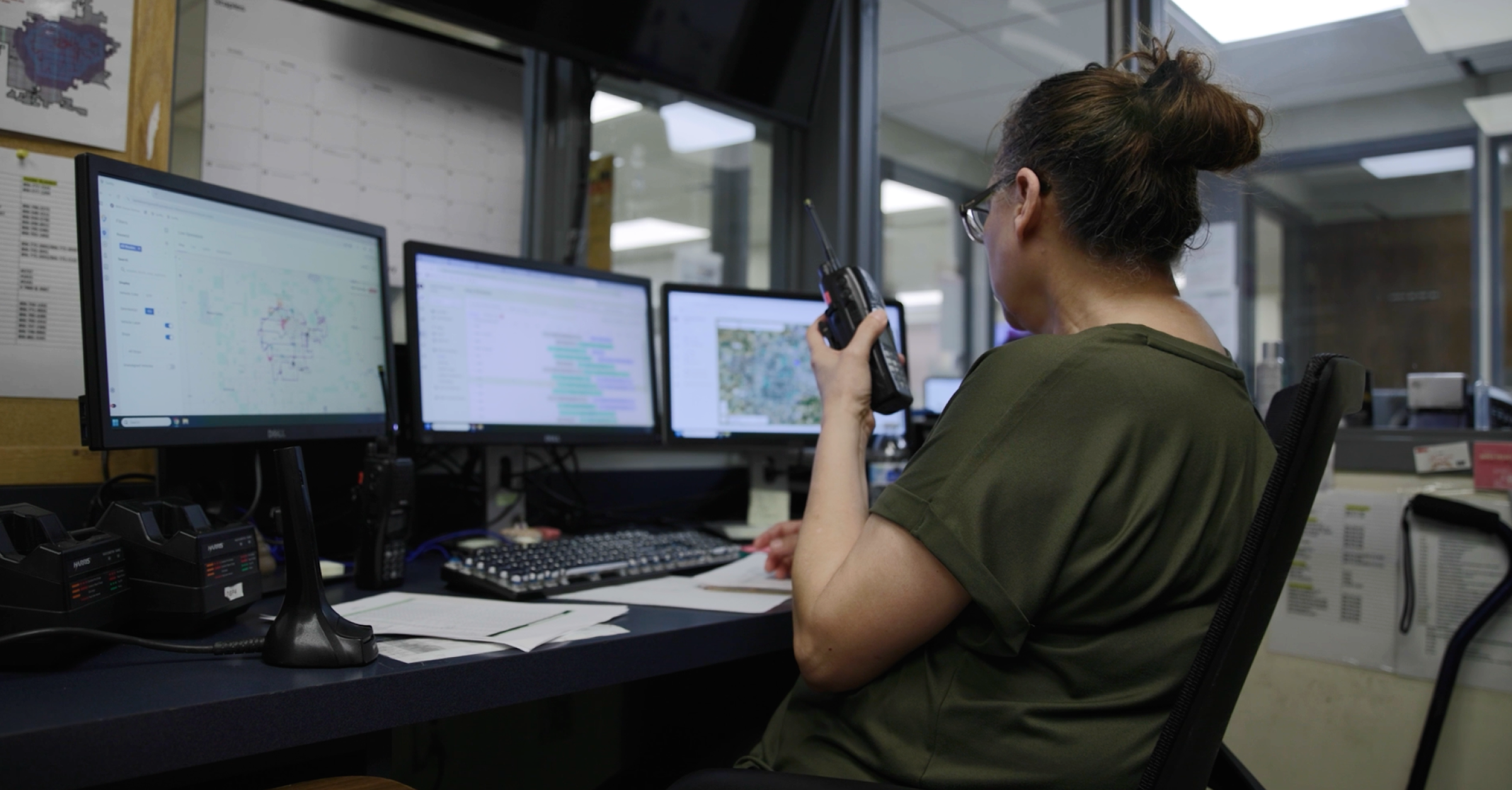
The platform enables the agency to manage same-day on-demand bookings and advanced ADA scheduling simultaneously, while routing vehicles dynamically to improve efficiency.
For operators, this change has simplified their day-to-day operations.
Melvin Williams describes the difference, “With Spare, you only have one trip at a time. You do not have to worry about being late or speeding to get there.”
Instead of juggling multiple pickups and route calculations, drivers now follow step-by-step instructions generated by the system. This reduces operator stress while improving reliability for riders.
Expanding access and equity in Lubbock
Commingling also allowed Citibus to dramatically expand their service coverage.
Before this change, ADA service was limited to areas within three-quarters of a mile of fixed routes. As Lubbock grew, many medical facilities, employment centers, and new neighborhoods were located outside those boundaries.
By bringing microtransit and paratransit together and expanding service to the city limits, Citibus opened up new travel opportunities for riders across the region.
Katrina Garcia explains the impact. “It did open up access across the board for everybody. Paratransit riders can get to new medical facilities and the general public can reach new job opportunities.” This model ensures accessibility while delivering the flexibility that riders expect from modern mobility services.
Results show more riders, better efficiency, and greater access
Since switching to a commingled model, Citibus has seen real, measurable improvements in ridership, operational efficiency, and community access.
Today, the agency delivers around 700 trips per day across its on-demand and paratransit services, all within the same shared fleet.
Higher vehicle efficiency
One of the clearest indicators of the system’s success is its 78% pooled trip ratio, meaning most rides share a vehicle with other passengers traveling in the same direction. This level of pooling dramatically improves how the fleet is used. Instead of sending multiple vehicles across the city for individual trips, the system groups riders together. Each vehicle serves more passengers throughout the day, without requiring more vehicles or drivers.
Reliable service at scale
Despite the complexity of managing both ADA trips and same-day on-demand bookings, Citibus maintains more than 92% on-time performance across its fleet. For riders this reliability means confidence that a vehicle will arrive when expected, whether they are traveling to work, school, a medical appointment, or to the grocery store. For the agency, it demonstrates that a commingled model can scale while maintaining strong operational performance.
Meeting previously unmet demand
The transition to commingled service also revealed a significant amount of previously unmet demand for transportation. After integrating services, Citibus saw daily trips double from 300 to 600 per day.
This surge confirmed that many residents needed more flexible and accessible mobility options than the traditional fixed-route system alone could offer.
Melvin Williams recalls being surprised. “What surprised me was how many people actually really need the service.”
Expanding mobility across the city
What these trips mean for riders matters just as much as the numbers. By commingling services and extending coverage to the city limits, Citibus expanded access to destinations that were previously difficult or impossible to reach by transit.
Riders can now more easily access medical facilities outside traditional ADA zones. For many residents this means transit is no longer just a last resort. It’s a viable and convenient way to move across Lubbock.
A system that works better for everyone
The success of Citibus’ commingled model demonstrates that modernization can deliver benefits across the entire transit ecosystem.
- Operators experience less stress and simpler routing
- The agency achieves higher efficiency and better fleet utilization
- Riders gain faster and more flexible access to destinations across the city
Together these outcomes show how a thoughtfully designed commingled system can transform both operational performance and community mobility.
Looking Ahead
Citibus continues to explore new tools and technologies to further improve mobility across the region.
But the agency’s biggest success may already be clear. By combining microtransit and paratransit into a unified system, Citibus created a transportation model that adapts to riders’ needs while maximizing efficiency.
For transit agencies looking to modernize, Citibus offers a powerful lesson.
When services work together instead of separately, everyone moves further.
The story doesn't end here — see how Citibus used commingling to deliver more efficient service with Spare!