

COTA is Setting a New Standard for Paratransit Reliability and the Rider Experience

Scout gives us the ability to get answers in real time and make quicker decisions. We can better understand why an issue is happening and use that information to improve how we operate.

For riders who depend on paratransit, reliability means more than an on-time pickup. It means getting to medical appointments, work, and other commitments on schedule, with the confidence that transportation won't disrupt their day.
Central Ohio Transit Authority (COTA) has spent years delivering that reliability through Mainstream, its ADA paratransit service. Supporting approximately 1,000 boardings on a typical weekday across four contractor fleets, the agency had consistently maintained on-time performance of around 95–96%.
With demand growing across Central Ohio, COTA saw an opportunity to build on that success. The priority was to give riders more independence, digitize eligibility processes, and equip staff with better tools to understand and manage daily operations, all while protecting the service standards riders already relied on.
In March 2026, COTA transitioned to Spare, taking the next step toward a more convenient, connected paratransit experience while maintaining the reliability its riders had come to expect.
Launching through a snowstorm and building on reliable service
The transition faced an unexpected test almost immediately. The morning Mainstream went live on Spare, a snowstorm swept through Columbus. Driver call-outs followed, leaving dispatchers and contractor teams to manage difficult road conditions while getting familiar with a new system.
The weeks that followed gave the team an opportunity to settle into the platform and see how its new tools could support an already reliable operation.
Pickup on-time performance rose during the lower-demand summer months, before easing again as demand returned in September and October. For COTA, those fluctuations reinforced the importance of understanding changing service conditions rather than judging success by a single snapshot.
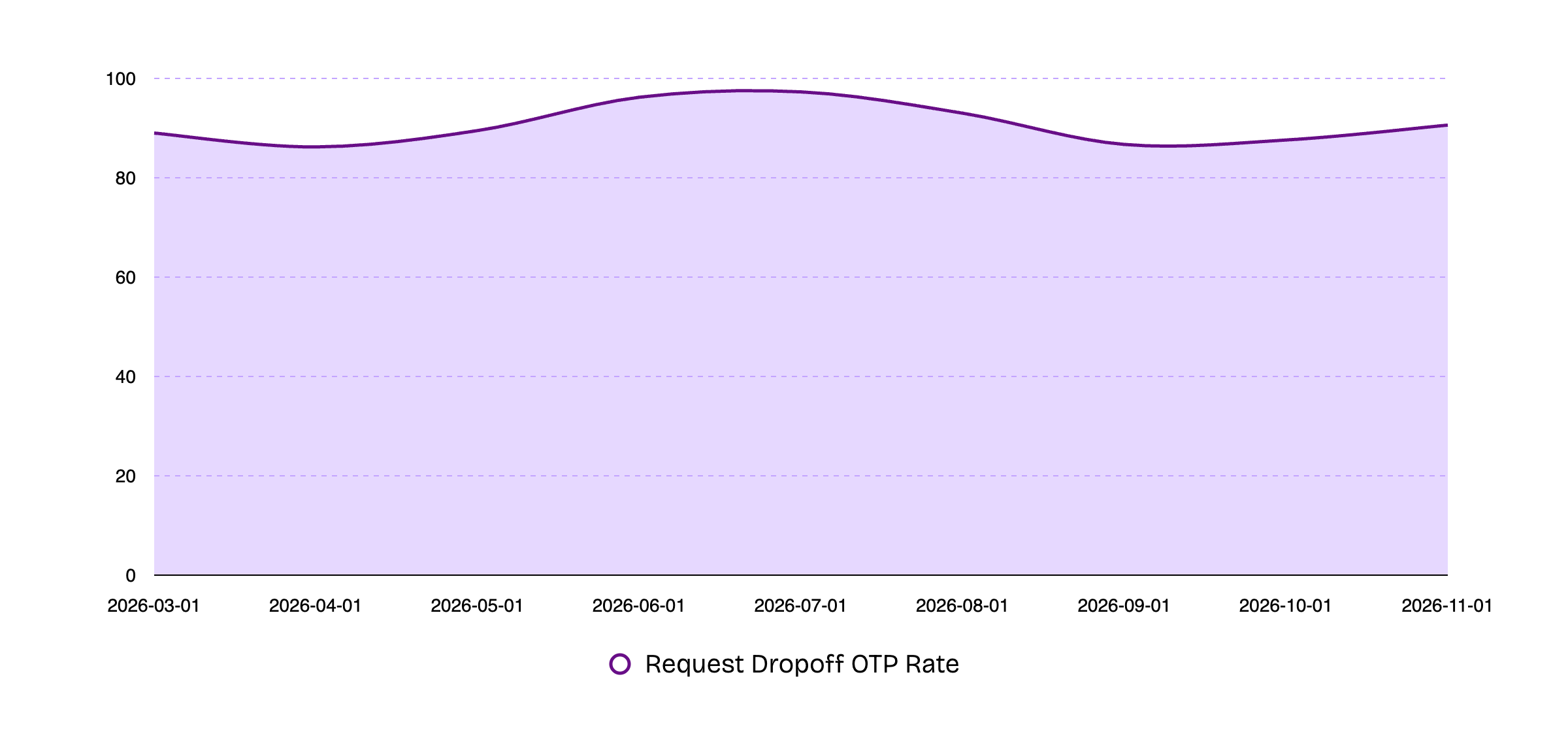
One of the more consistent improvements was at the other end of the journey, getting riders to their destination on time.
Getting riders where they need to be, on time
A vehicle can arrive within its pickup window and still leave someone late for an appointment.
That's why drop-off reliability is such an important part of the Mainstream experience. For a rider heading to a medical appointment, a job, or another time-sensitive commitment, arriving when expected is often what determines whether the trip has been successful.
In July, 98.6% of Mainstream trips with appointment times reached their destinations on time. More importantly, COTA reports that drop-off on-time performance has been consistently about two percentage points higher than under its previous software, an improvement the team believes is supported by better travel-time calculations and dynamic subscription pickup windows.
That improvement builds on COTA’s longstanding reliability. With better operational reporting, the team can also see more quickly when demand or other conditions begin affecting service.
Less time onboard and more time for what matters
In March, 12.2% of trips involved more than an hour onboard. For someone travelling to work, an appointment, or home at the end of the day, that could mean a significant amount of time spent in a vehicle.
The team made reducing those longer journeys a priority.
By July, the share of trips lasting more than an hour had fallen to 4.9%, a 60% reduction. Average ride times also dropped from 35.6 minutes to 30.1 minutes.
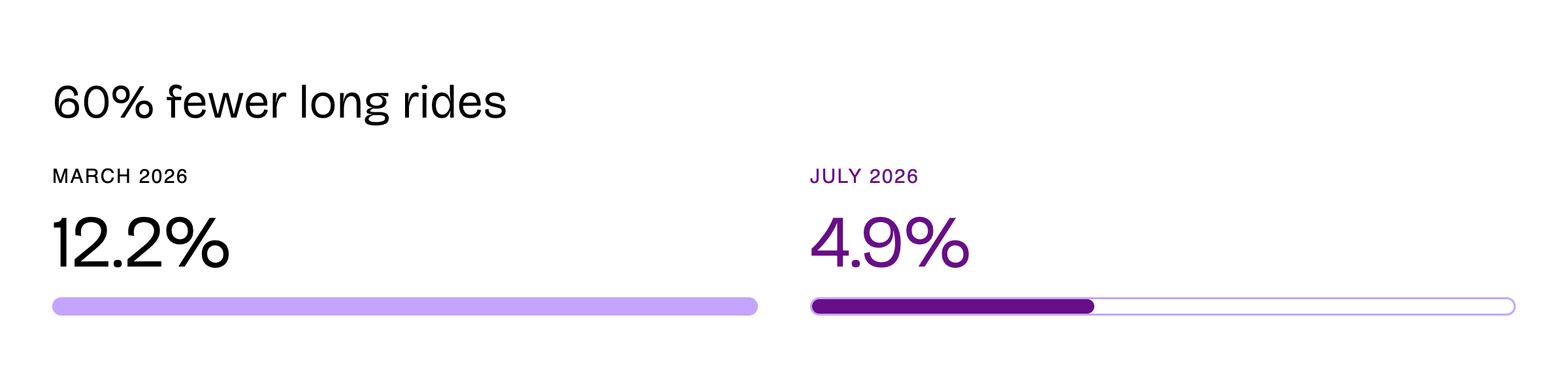
During this period, that represented approximately 1,960 fewer hours spent onboard vehicles in a month. Paired with lower demand throughout the summer months, these shorter journeys gave riders more time for the things they were travelling to do.
As demand picked up again in September and October, journey times naturally fluctuated, reinforcing the importance of understanding how changing service demands affect the rider experience.
Together with stronger drop-off reliability, these results highlight COTA's continued focus on making daily travel more predictable and giving riders more time for what matters.
Better visibility, quicker decisions, and more adaptable reporting
Maintaining reliable service across four contractor fleets means knowing what is happening throughout the day, recognizing when the operation is under pressure, and being able to respond as conditions change. COTA gained much stronger reporting visibility with Spare than it had with its previous software.
With Scout, Spare's AI copilot, COTA's team can investigate performance and get answers to operational questions without waiting for reports. Whether it's understanding why a vehicle spent longer than expected at a pickup or identifying opportunities for operator coaching, staff can use that information to make quicker, more informed decisions.
“Scout gives us the ability to get answers in real time and make quicker decisions. We can better understand why an issue is happening and use that information to improve how we operate.” - Justin Henderson, Director, Mobility Services, COTA
COTA also uses dashboards to bring together pickup and drop-off performance, completed trips, passenger productivity, and rider feedback. Rather than relying on a fixed set of reports, the team can adjust what it tracks as new operational challenges emerge.
That flexibility helps management get a clearer picture quickly when service is under pressure, investigate trends, and make informed decisions. For Jonathan Curran, On-Demand Systems Manager at COTA, the ability to adapt reporting connects day-to-day performance with the rider experience and helps the team focus on what matters most at a given moment.
“It's impressed me, and I'm not easy to impress.” - Jonathan Curran, On-Demand Systems Manager, COTA
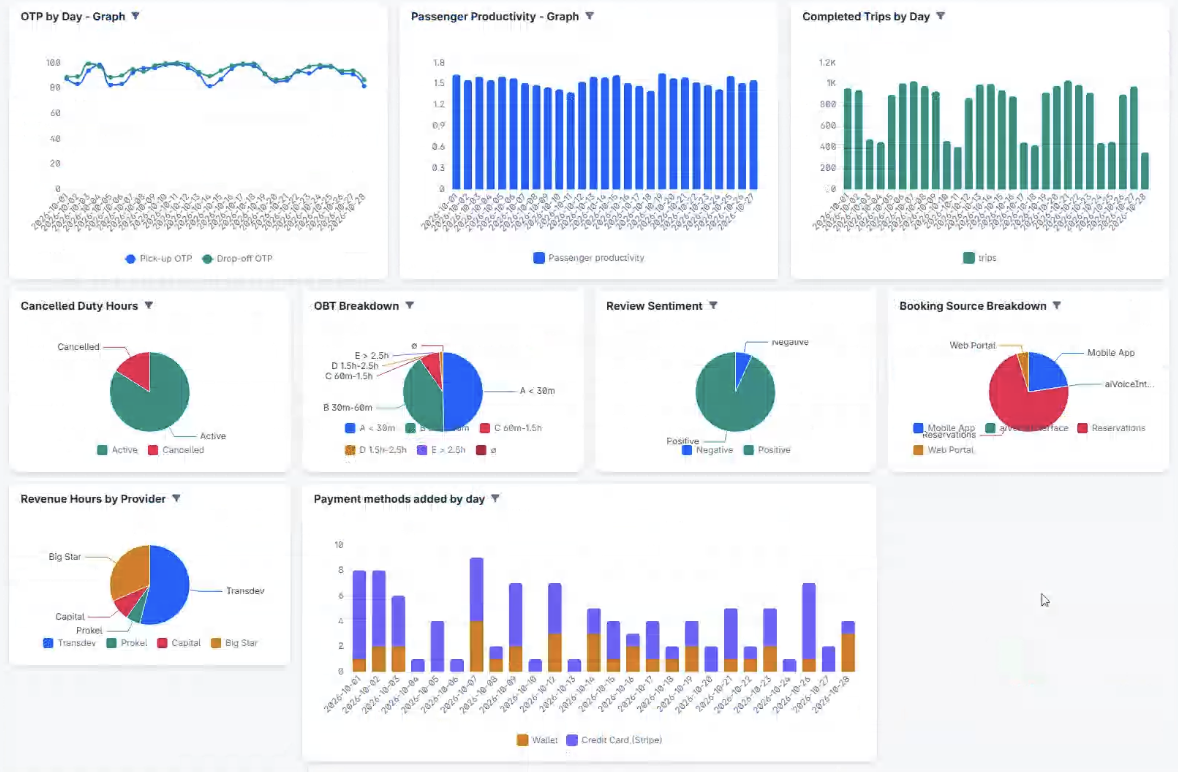
That same visibility is also supporting collaboration between COTA and its contractors. With shared insights into service performance, teams can stay aligned, identify opportunities for improvement, and work together to deliver a better rider experience.
“It's helped us have the necessary data to hold our partners accountable going forward.” - Amy Hockman, Deputy Chief Operating Officer, COTA
For an agency already operating to high standards, having this level of insight means more opportunities to make small, meaningful improvements that add up to a better experience for riders.
Giving paratransit riders more of the choices they deserve
Giving Mainstream riders more choice and independence was a central reason COTA selected Spare. The agency wanted to modernize customer-facing features and digitize eligibility, while continuing to offer the familiar options riders already used.
Being able to check a trip on your phone, book a ride independently, or pay with a digital wallet shouldn't be limited to fixed-route transit. Giving Mainstream riders access to those same options, while preserving the booking and payment methods they already rely on, was a major reason COTA chose Spare.
And riders are already taking advantage of them.
Before the transition, fewer than 5% of Mainstream trips were booked independently by riders. By August, that share had reached 23.7%, with mobile app bookings alone growing from 3.1% to 18.2%.
What's especially encouraging is how naturally riders have embraced the new options. Following an initial introduction in May, adoption has largely been driven by word of mouth and front-desk staff helping riders discover the app and understand how to use it.
Amy Hockman has seen how positively riders respond once they realize they can book and monitor their own trips. Rather than having to call to make a reservation or check on an upcoming ride, they have another way to manage their travel independently.
And that growing independence extends beyond booking. Mainstream riders now have more flexibility in how they pay, with credit cards, digital wallets, and digital monthly passes available alongside traditional payment methods.
The shift is already visible in how riders are using the service. In April 2026, COTA recorded just 176 credit card and wallet payment requests. By September, that number had climbed to 4,971.
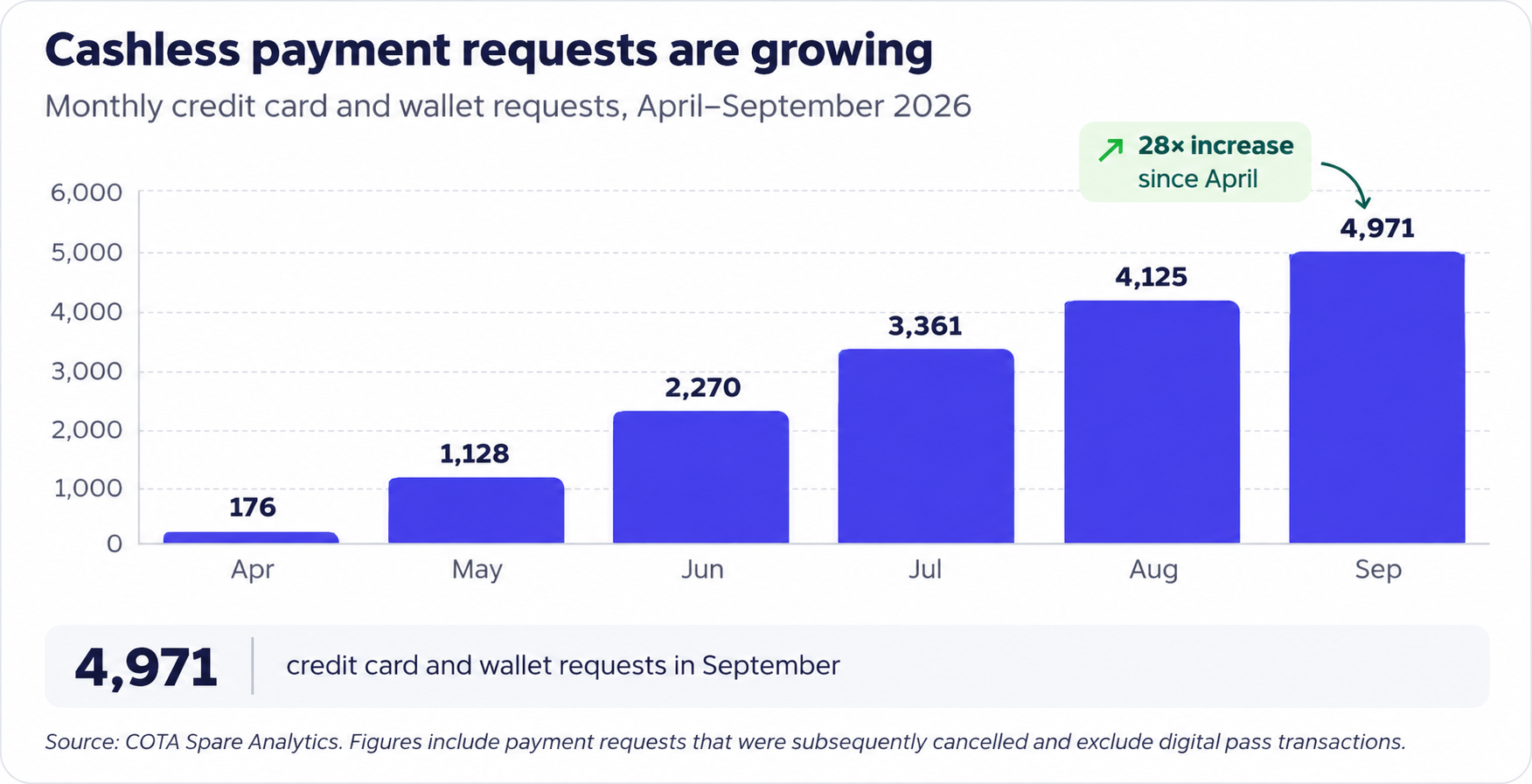
The early adoption has been encouraging, with riders embracing new ways to book, track, and pay for their trips. As more people discover these features through word of mouth and support from COTA staff, they're gaining greater flexibility and independence while still having access to the familiar options they rely on.
Building on that momentum, COTA plans to introduce more dedicated outreach and education in 2027, helping even more Mainstream riders discover the tools available to them and take greater control of their daily travel.
Supporting more riders with better information
As these improvements were taking shape, Mainstream was also getting busier. Ridership increased through the spring and summer, with July trips up 17% compared with the previous year.
Then September brought a new milestone. Mainstream delivered 26,426 trips, its busiest month on record, an 11% increase over September 2025.
From March through September, the service carried 13,067 more trips than during the same seven months the year before, an increase of approximately 8%. That's a substantial amount of additional demand for an operation coordinating multiple contractor fleets and hundreds of daily journeys.
As demand grew, COTA’s stronger reporting tools became especially valuable. Passenger productivity has been measured against a target of 1.55 passengers per revenue hour, while changing pickup performance and ride times have shown why managers need to monitor conditions throughout the year. The team can now see those shifts more clearly and adapt its reporting and decisions as challenges evolve.
The experience shows how a transit agency can expand digital options for riders while giving its staff better information to manage a busy, changing service.
Building on the progress
Since launching Spare in March 2026, COTA’s Mainstream service has recorded its busiest month on record and given riders more ways to manage their journeys independently.
Riders can book, track, and pay for trips in more ways, while COTA continues its work to digitize eligibility. Behind the scenes, improved drop-off reliability, flexible dashboards, and Scout give staff better visibility into daily operations and the information they need to make timely decisions.
Mainstream was already delivering strong reliability before the transition. What has changed is how much more COTA can offer riders and how quickly its teams can understand and respond to operational challenges. That combination of rider choice and better-informed service management is a strong foundation for Mainstream’s next chapter.
Hear from the team behind COTA
See how COTA is building on its strong foundation of reliable paratransit service with more rider choice, better operational visibility, and tools that help its team make informed decisions.