From Category Leaders to Public Transit, Mik Lernout is Ready to Build What’s Next

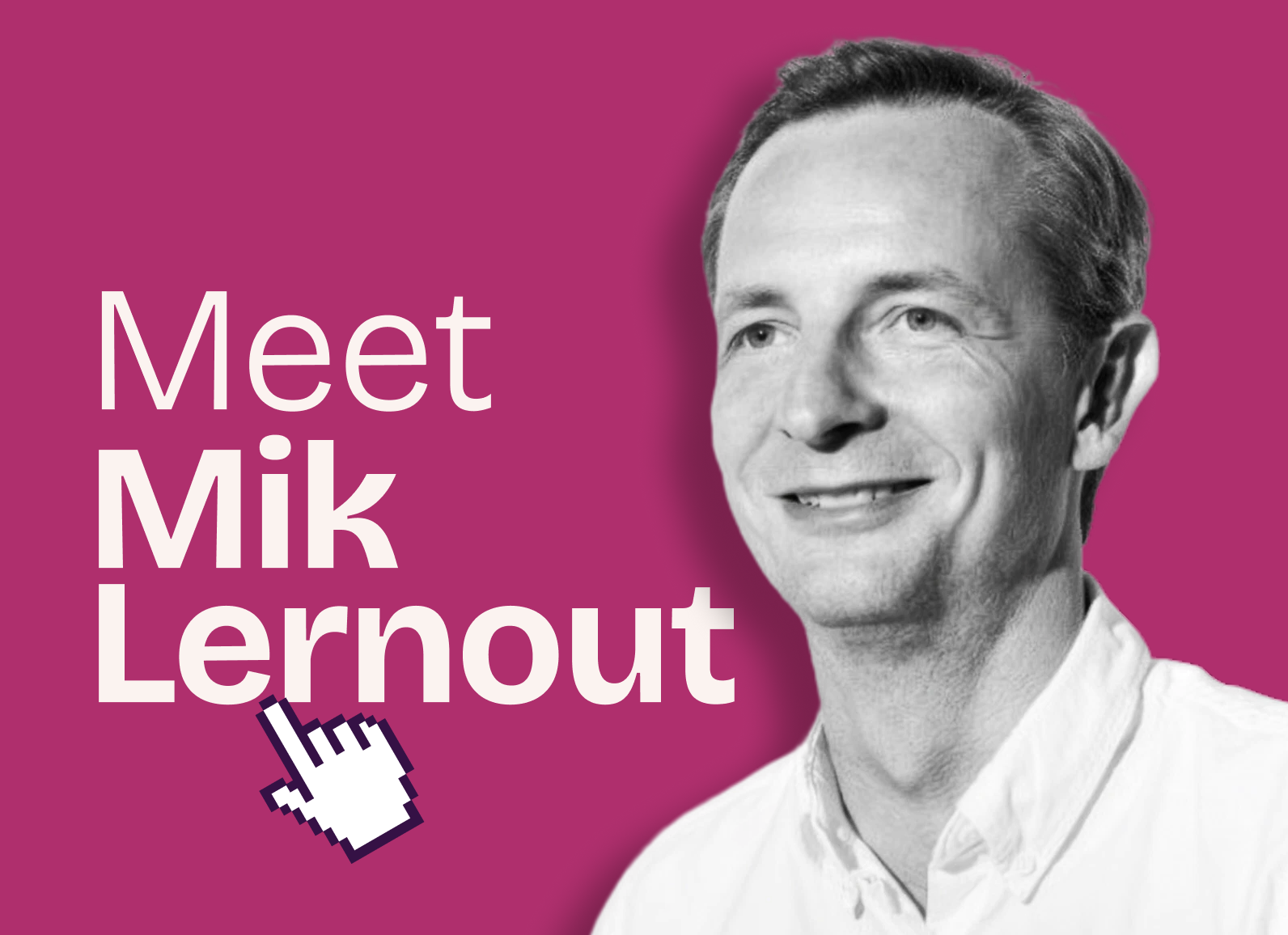
Mik Lernout has spent much of his career building technology for industries with highly specific needs.
Before joining Spare as VP of Product, he led product and design at Boulevard, a vertical software company serving the beauty and wellness industry. Before that, he did the same at Clio, helping build products for law firms during a period of rapid growth. He’s also led R&D at Hootsuite, founded his own company and started his career as an engineer.
Along the way, he’s seen what happens when a technology company grows from one of many players into an industry leader.
“When you become one of the biggest players, you get this amazing opportunity to really change the industry,” Mik says. “It’s no longer just about the software and the products. It’s about this community of people using it.”
Now, he sees that opportunity in public transit.
A familiar challenge in a new industry
Mik’s connection to Spare actually started long before he joined the company.
While he was at Hootsuite, Spare’s founders were working out of the company’s Vancouver offices. He remembers meeting Alexey Indeev when Spare was still getting started and watching the company grow from a distance.
Coming back years later, he found a very different company, but one tackling the kind of challenge he already knew he loved.
“I love helping a company become a leader and taking on product leadership from really passionate, product-centric founders,” he says.
The difference this time was the industry. Originally from Belgium and now based in Vancouver, Mik is a regular transit user who has long been interested in cities, local government and mobility. He’s experienced different approaches to transit across Europe and North America and wanted an opportunity to work on something that directly shapes people’s everyday lives.
“The outcomes aren’t just dollars and cents,” he says. “It’s the impact on riders, the impact on drivers. It can be harder to quantify in some ways, but it’s also much more impactful in society.”
Transit has also introduced him to a different kind of industry culture. Unlike many of the industries he’s worked in before, agencies aren’t competing for the same customers. They regularly share ideas, data and lessons with one another.
“We’re all working on the same mission in a lot of different ways,” Mik says. “It’s cool to see that come together.”
Building around what agencies actually need
One of the things that initially stood out to Mik about Spare was the breadth of what had already been built across different transit services, geographies and operational needs.
But just as important was how it had been built.
“The best product organizations do both,” Mik says. “They listen to customers really, really well, but they also take learnings from the market, the industry and technology and are able to bring those together.”
For Mik, that distinction comes down to understanding what customers need, not simply building exactly what they ask for.
Working across many transit agencies gives Spare visibility into recurring challenges and common patterns. Combine that operational understanding with what’s happening in technology, and there’s an opportunity to find solutions an individual organization might not see on its own.
“We can find commonalities around how we can improve a service or what type of product we can develop,” he says. “We’re leaning on the brains of everybody.”
That becomes especially important as technologies like AI create new ways to solve longstanding operational problems.
Giving time back to transit teams
Mik sees one of the biggest opportunities ahead in what he calls agentic operations.
Transit agencies, like many government organizations, often rely on multiple systems that don’t easily communicate with one another. Staff fill those gaps themselves, moving information between systems, monitoring changes and completing repetitive tasks.
That’s where he believes AI agents can make a meaningful difference.
“The opportunity over the next couple of years is to take that low-value work, the things where humans aren’t really adding much value, and move that to AI and agents,” Mik says.
The goal is to give people more capacity for the work where their experience and judgment matter most.
“Free up our time, free up our budgets, and allow people to solve bigger problems for riders and communities.” For Mik, that’s ultimately the promise of AI in transit. Not simply doing the same work differently, but giving agencies more capacity to focus on improving service.
Looking at the whole operation
The same principle applies to bringing more of an agency’s operations together.
Historically, transit technology has been divided into individual systems built around individual functions. Fixed route, paratransit, microtransit, workforce management and asset management may all have separate tools, even though the operations themselves are closely connected.
“These systems organically grew as single-purpose point solutions,” Mik says. “The reality is that they have a lot of overlap with each other.”
Connecting them gives agencies the ability to think beyond individual modes. A leadership team could look across its network and ask where fixed route makes the most sense, where microtransit could be more effective or how resources could be used differently as demand changes.
“There are all these different possibilities,” Mik says. “There’s really only a connected system that can make those kinds of recommendations and help us make those kinds of decisions.”
Making transit teams feel like superheroes
Despite all the complexity behind transit operations, Mik’s goal for the product experience itself is simple.
He wants people to feel like superheroes.
“Great products make you feel like you’re a superhero,” he says. “You have so much power sitting at your fingertips. You only have to make a few small movements to make big changes in people’s lives.”
For a transit team, that means being able to see what’s happening, understand what needs attention and act without fighting the technology along the way.
“They can see everything that’s happening. They know exactly what they should be paying attention to. They can act based on that information,” he says.
It’s the kind of experience Mik now wants to help build at Spare, giving the people running transit more time and better tools to focus on the people who rely on it.




“Once we unified dedicated vehicles and TNCs on a single platform, the experience changed immediately for riders. They could see their trip in real time, understand their fare, and know what to expect. From a staff perspective, it eliminated confusion and allowed us to focus on service instead of troubleshooting.”