Reliability is Accessibility

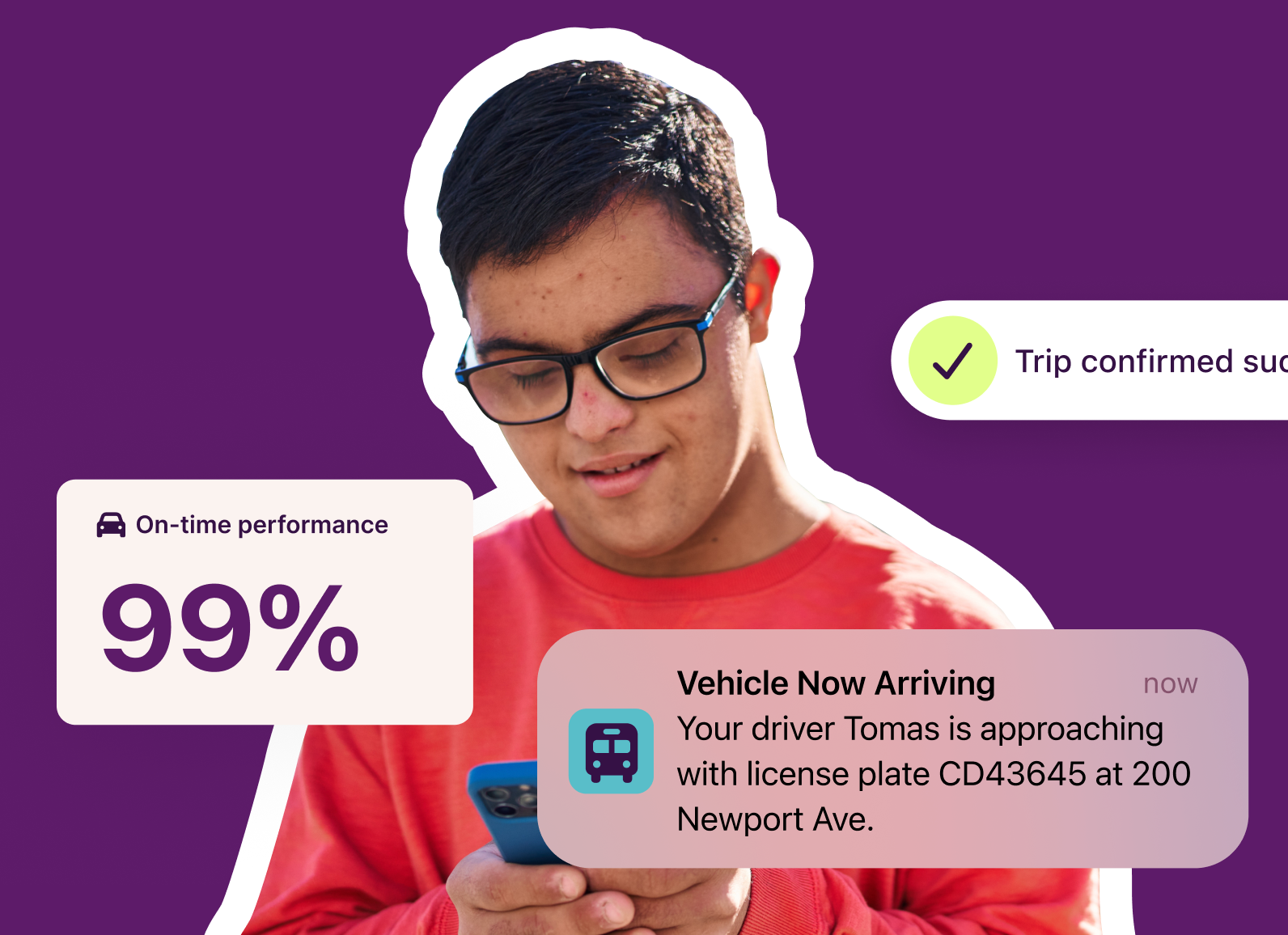
Transit agencies spend a lot of time on accessibility compliance: ramps, kneeling buses, accessible booking interfaces. All of it matters. But for riders with cognitive disabilities, the most important accessibility feature is simpler. Does the service show up when it's supposed to, and does someone tell them when it doesn't?
Reliability is a form of accessibility and it's something transit agencies can both build and measure. Most just haven't framed it that way yet.
Who actually rides paratransit
Cognitive disabilities are among the most common reasons riders qualify for ADA paratransit. Autism, intellectual disabilities, anxiety disorders, and dementia all show up frequently in eligibility files. But paratransit is only part of the picture. Riders with cognitive disabilities also use fixed routes and microtransit every day, often without any formal accommodation.
They're also among the least visible riders in how agencies design and measure service. They want to know their ride is coming, to know when it will arrive, and to hear from someone if anything changes. When a trip runs late, they need that information before they've spent 20 minutes at the curb wondering what happened.
That's an operations and communication gap. The good news is that it's one agencies can close.

The impact of predictability
For most riders, a late bus is an inconvenience. For a rider with autism or an anxiety disorder, it can derail the whole day. It also chips away at the trust they need to get on the bus next time.
This is a different standard than on-time performance as a service-quality metric. On-time performance tells you how the service ran. Reliability, from the rider's side, determines whether they can use transit independently at all.
What separates a service these riders can count on from one they give up on is what happens when a trip goes sideways. A notification sent before the rider starts to worry, with a clear explanation of what's happening, does more for confidence than a slightly faster vehicle ever could.
Agencies that get this right see it in ridership growth. Agencies that don't see it in complaints, no-shows, and rising paratransit demand that could often be served more affordably on fixed route or microtransit.
What good communication actually says
Sending a notification is not the same as communicating well. For this population, the content of the message matters as much as the timing.
A good alert uses plain language and a predictable format. It says one thing clearly, that your vehicle is two minutes away, or your trip is running ten minutes late and here's the new arrival time. It avoids jargon, avoids burying the key detail, and gives the rider a single thing to do or expect. The same message structure every time builds familiarity, and familiarity builds trust.
The rider isn't always the only person who needs that message. For many riders with cognitive disabilities, a caregiver or family member books the trips, watches for the vehicle, and decides whether the rider can travel on their own. When the agency keeps that person informed automatically, it builds confidence on both sides. The rider feels supported, and the people supporting them stop having to call in to find out what's happening.
The paratransit shift hiding in plain sight
Many agencies have a real opportunity to move some trips from paratransit onto fixed route or microtransit. The candidates are riders who are conditionally eligible such as individuals who can use fixed route services in certain conditions but rely on paratransit as a fallback.
This matters financially because paratransit costs far more per trip than other service types. For riders who can use fixed route when service is reliable and well communicated, the barrier isn't physical access. It's confidence.
This is where eligibility tools and rider communication do their most important work. They help agencies identify which riders could transition under the right conditions. Then they deliver the predictable, well-communicated service that makes the transition stick.
A rider who knows their bus is coming, knows it will arrive within a predictable window, and gets a notification if anything changes can ride fixed route often. Without that assurance, they'll keep needing paratransit.
It's worth being honest about the limits here. Not every conditionally eligible rider should transition, and the ones who can often won't on the first try. Confidence builds over time, with setbacks along the way. The goal isn't to push riders off paratransit. It's to make fixed route a real option for the riders who want it, while keeping paratransit available without friction for everyone who genuinely needs it.
What this looks like in practice
For transit agencies, the practical focus is three things:
- On-time performance (OTP)
- Rider communication
- Eligibility and trip management workflows
Improving OTP requires better scheduling, better real-time visibility, and better tools for dispatchers to respond when things go wrong. Spare's dispatch tools give operations teams a live view across all active trips, flagging late pullouts and potential issues before they become missed pickups. At CapMetro, dispatchers moved from reactive firefighting to proactive monitoring and on-time performance climbed from 88% to 95% as a result. At Winnipeg Transit Plus, what used to take a dispatcher 30 to 45 minutes to resolve now takes a couple of minutes.
Improving rider communication means sending the right information at the right time, rather than waiting for riders to call in and ask. Spare's notification tools send ETAs, trip reminders, and service alerts automatically so riders know their vehicle is two minutes out before they start watching the curb. At Winnipeg, the contact center went from fielding constant inbound calls to agents reporting stretches of an hour with no calls at all. While this is operational improvement, for a rider with a cognitive disability it’s also the difference between a trip that feels manageable and one that doesn’t.
Managing paratransit eligibility well means having a system that handles conditional eligibility, tracks which riders might be candidates for fixed route, and supports the gradual transitions that build rider confidence over time. Spare Eligibility centralizes the full case lifecycle — applications, assessments, determination letters, appeals — in one place, with conditional eligibility rules that agencies can configure around their specific rider populations. Agencies like Winnipeg, RTC Washoe, and Metro St. Louis are already using conditional eligibility actively, enforcing trip-type restrictions based on conditions like weather or route availability, without adding friction for riders who genuinely need paratransit.
Don't forget the driver
The best notification in the world still ends at the curb, where the driver takes over. For riders with cognitive disabilities, the driver's behavior is part of accessibility too.
A driver who can see a rider's notes, who knows not to pull away early, and who handles pickup the same predictable way each time reinforces everything the communication promised. When rider profiles travel with the trip into dispatch and onto the vehicle, the driver isn't guessing. That consistency is often what turns a single successful trip into a rider who travels independently.
Where accessibility actually lives
None of that's glamorous work. It happens in dispatch queues and eligibility case files and notification triggers, long before a rider ever steps to the curb. But it only works when it's happening in one place.
When scheduling, dispatch, rider communication, and eligibility live in separate systems, the gaps between them are where service breaks down. A rider gets a late vehicle because the dispatcher didn't see the delay coming. A conditionally eligible rider ends up on paratransit because no one tracked the transition. A caregiver calls in because the notification never went out.
For a rider with a cognitive disability, those gaps aren't inconveniences. They're the reason they may stop using transit altogether.
When those functions run on a single platform, agencies can see problems before riders feel them. A rider who gets a two-minute warning, whose conditional eligibility is current, whose driver knows their needs, can travel independently. That's the outcome.
A unified platform doesn't deliver that on its own, but it removes the friction that makes good operations harder, and gives agencies a real chance to make reliability something riders can count on, not just something agencies measure.
That's what accessibility looks like in practice.



“Once we unified dedicated vehicles and TNCs on a single platform, the experience changed immediately for riders. They could see their trip in real time, understand their fare, and know what to expect. From a staff perspective, it eliminated confusion and allowed us to focus on service instead of troubleshooting.”