
Blended, Not Fragmented: Alexandria’s Approach to Modern Paratransit Delivery

“Once we unified dedicated vehicles and TNCs on a single platform, the experience changed immediately for riders. They could see their trip in real time, understand their fare, and know what to expect. From a staff perspective, it eliminated confusion and allowed us to focus on service instead of troubleshooting.”

The Challenge: Limited Visibility Created Friction Across the System
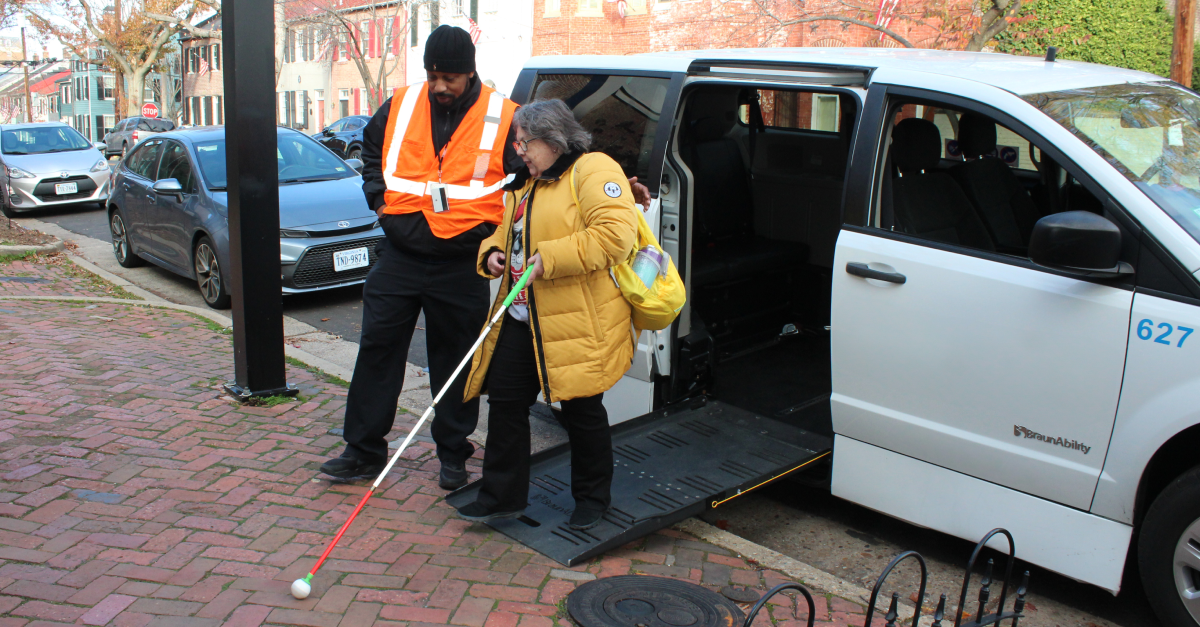
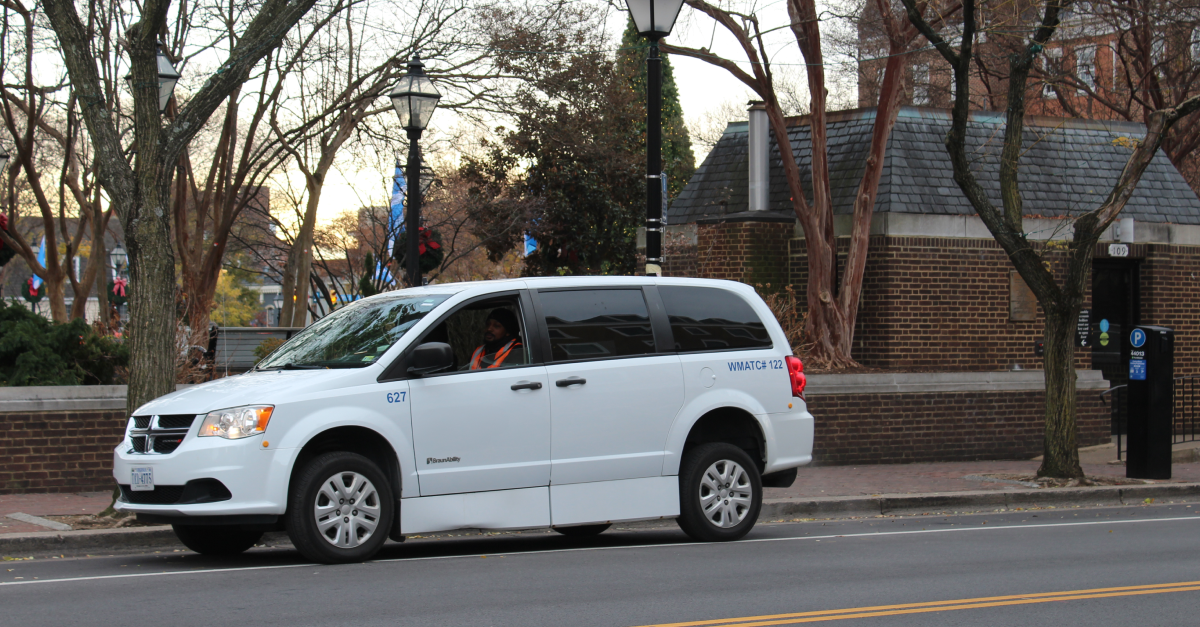
Alexandria’s paratransit program has always operated a blended model that relied on both a dedicated city fleet and usage of transportation network companies (TNCs) to fulfill overflow trips. While this approach helped meet demand, it also introduced operational blind spots.
Dedicated fleet trips and TNC trips lived in different systems, which meant no single source of truth in terms of data or visibility for riders, dispatchers, reservation agents, or city leadership. One of the most acute pain points was fare visibility on TNC trips. Riders who had already paid digitally were sometimes asked to pay again in cash because payment confirmation was not visible to the TNC driver.
This lack of visibility resulted in:
- Frustrated riders and drivers
- Call center agents and dispatchers spending excessive time resolving avoidable issues
- Leadership lacking confidence in real-time system data
After-hours service was especially challenging. When the call center closed at 5pm daily, dispatchers were frequently pulled away from operations to answer basic rider questions, compounding delays instead of solving them.
The Solution: One Integrated Platform Powered by Spare
In May 2025, Alexandria brought its entire paratransit operation onto Spare, allowing for the unification of dedicated vehicles and TNCs within a single platform.
For the first time, everyone involved in service delivery could see the same information in real time. Riders, staff, and city leadership gained shared visibility into trip status, payments, vehicle assignment, and ETAs.
Key elements of the transition included:
- Unified trip visibility for both dedicated fleet and TNC trips
- Integrated fare data that eliminated payment confusion
- A rider-facing app with clear, real-time trip information
- Operational tools that dispatchers and reservationists could trust
The impact was immediate, with several long-standing issues disappearing on day one.
“Once we unified dedicated vehicles and TNCs on a single platform, the experience changed immediately for riders. They could see their trip in real time, understand their fare, and know what to expect. From a staff perspective, it eliminated confusion and allowed us to focus on service instead of troubleshooting.”
- Owen Albrecht, Paratransit Manager, City of Alexandria
System Visibility That Changed Day-to-Day Operations
According to Alexandria’s paratransit leadership, improved visibility, particularly for TNC trips, was the single biggest win after launch.
With Spare in place:
- Fare disputes caused by missing payment data were eliminated
- Staff could track and manage all trips from one interface
- Issues that once took multiple phone calls to resolve were addressed quickly
Beyond efficiency, this visibility reshaped internal dynamics. Teams no longer debated whose data was correct. With a shared source of truth, interdepartmental relationships improved, and staff reported significantly less stress during daily operations.
Reliability Gains That Changed How Teams Work
Improved visibility translated directly into stronger reliability. Alexandria’s on-time performance increased rapidly after launching with Spare.
On-time performance improved from approximately 88–90% to a consistent 95–100%.
For riders, this meant fewer late pickups and greater confidence in the service. For staff, it meant fewer “Where is my ride?” calls and more time to focus on meaningful operational work.
Operational benefits included:
- Reservation agents spending less time answering status calls
- Dispatchers no longer handling high volumes of after-hours rider inquiries
- A calmer, more proactive dispatch environment
As one leader noted, when trips are running on time and riders can see what’s happening, “there’s nothing to call about.”
A Measurably Better Rider Experience
Riders noticed the changes quickly. Alexandria’s paratransit service now reports strong satisfaction and growing digital engagement.
Key rider metrics include:
- 92% overall rider satisfaction
- App usage increased from 8% before launch to 18% overall
- Mobile, AI Voice, and web bookings now account for 28% of all trips
Several factors contributed to this improvement. The Spare app is more intuitive and accessible than the city’s previous technology, and call center agents actively support riders who want to learn how to book digitally.
Adoption has also been driven by word of mouth, particularly in senior housing and high-density pickup locations where riders share tips and experiences. Notably, the city has begun receiving unsolicited compliments through its feedback channels - something that was rare prior to the transition.
“The app is better because it allows us to keep better track of trip locations and provides updates on what is coming up. Users can also give feedback about their rides through the app. Additionally, clients can update their information within the app.”
- City of Alexandria Rider
TNCs as a Strength, Not a Compromise
Alexandria has long operated a blended paratransit model, with TNCs playing a critical role in meeting rider demand. Prior to Spare, however, the city had limited visibility into TNC trip data. Payment status, trip details, and real-time updates often lived outside the city’s core systems, making it difficult for staff to monitor service performance and for riders to understand what was happening with their trips.
What changed with Spare was not the volume of TNC trips, but the visibility and integration of those trips into a single platform. With direct TNC integration, Alexandria gained a unified view of all services—dedicated fleet and TNCs alike.
As a result:
- Riders now receive consistent, real-time trip information regardless of the provider
- City staff can see trip status, payments, and performance data in one system
- Issues related to addresses, timing, or fares are identified and resolved far more quickly
This integrated, blended model supports reliable, cost-effective service while delivering a more transparent and predictable experience for riders and city staff alike.
Looking Ahead: Building a Unified Mobility Ecosystem
Alexandria is continuing to expand its use of Spare as part of a broader mobility vision.
Planned initiatives include:
- Bringing five city-operated vehicles onto the Spare platform in 2026
- Integrating senior transportation services managed by the Department of Social Services
- Expanding digital and automated rider communications
Each initiative builds toward a single, unified system that prioritizes accessibility, visibility, and operational confidence.
The Takeaway
Alexandria’s experience demonstrates how modern paratransit technology can deliver tangible improvements without sacrificing equity or service quality.
With Spare, the city has achieved:
- Clear, system-wide visibility across all trip types
- Measurable gains in reliability and rider satisfaction
- A calmer, more effective operating environment
- A more transparent, dignified experience for riders
For cities seeking to modernize paratransit while maintaining a strong blended service model, Alexandria offers a clear and compelling example.