How AI Natural Language Analytics Is Changing Transit Oversight

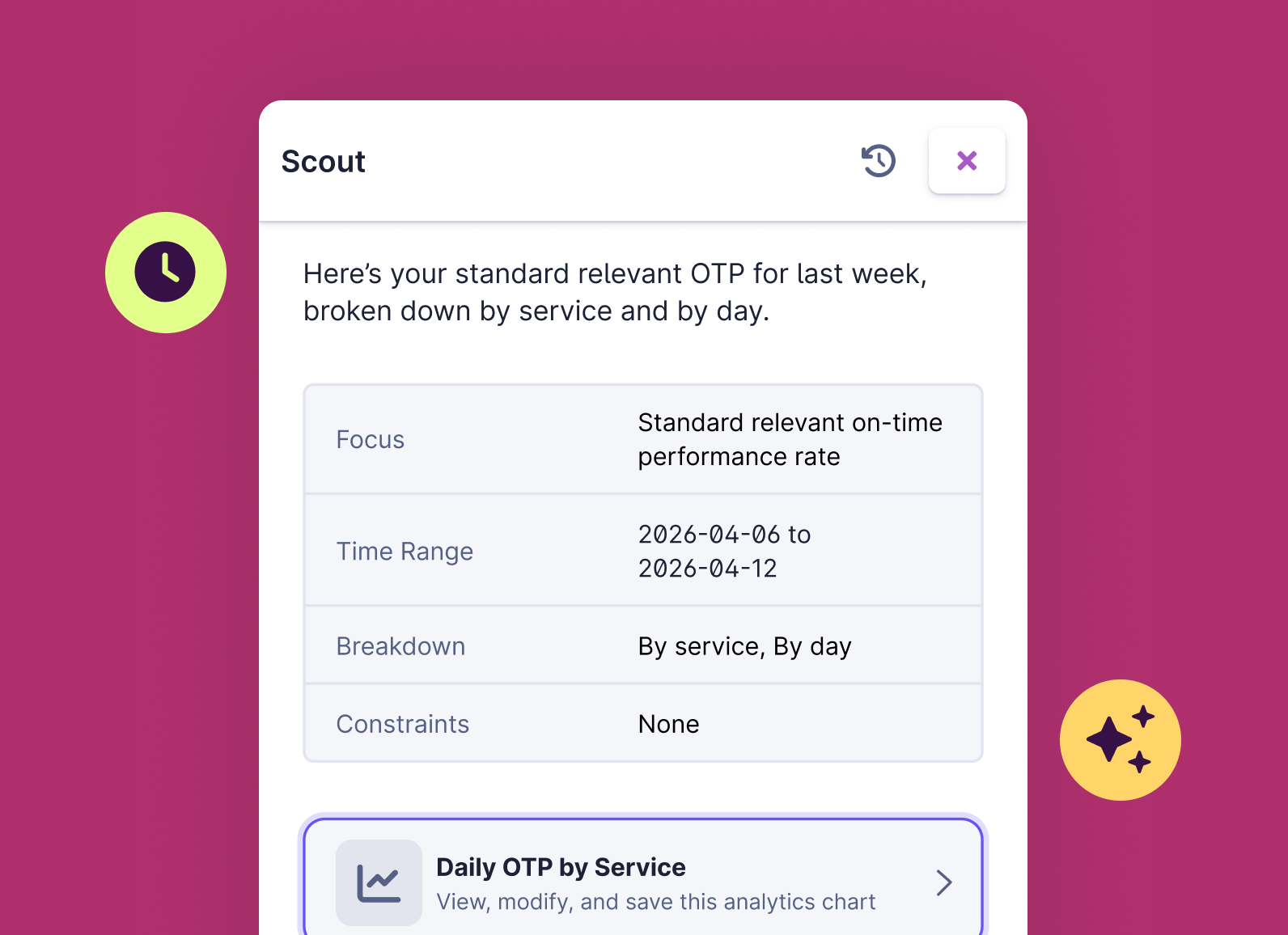
Data shouldn't slow down decisions, but for most transit agencies it does. Between analyst backlogs, manual reporting cycles, and siloed spreadsheets, turning raw data into actionable insight takes far too long. AI-powered natural language analytics changes the equation, giving transit teams the answers they need in real time, without waiting on a specialist.
Rather than waiting on custom reports, agency leaders can now ask questions in plain language and get clear, structured answers immediately. This reduces reliance on analysts and helps agencies focus on improving service where it matters most: reporting cycles to real-time decisions, service design, and compliance adherence.
Faster answers, better decisions
Many agencies still operate with a “report-request cycle.” An operations manager notices a trend, requests a report, and weeks later gets charts and spreadsheets. By then, the situation may have evolved.
Spare’s Scout AI natural language analytics changes that. Instead of asking an analyst to pull data, a manager can type a question like:
- “Show me a bar chart of my OTP performance over the last few months, break this down by service.”
- "Create me a table of all riders who signed up in the past 90 days with how many trips they've taken."
- "Show me a line chart which shows how many deadhead hours we have each day over the last 30 days."
The system returns answers instantly, organized in practical ways (by hour, provider, rider type, or funding source). This allows decisions to happen in real time, not after the fact.
Which means missed trips get caught before they become patterns, and budget overruns get flagged before they become crises. For an agency leader, that's the difference between catching a service gap on Monday and hearing about it from a frustrated rider on Friday.
Designing service with real demand
Understanding actual demand patterns is critical for service planning, but traditional reporting often lags behind operations.
With Scout AI analytics, agencies can explore demand in minutes. For example, one agency used demand and service-level insights to spot where supply didn’t match demand during peak hours. By asking simple questions about demand by time of day and adjusting staffing the same day, they improved reliability without overserving low-demand periods.
Here’s what made the difference:
- The team didn’t wait for analysts to build custom reports
- They were able to ask questions directly and received answers tied to real operational metrics
This changes how service design happens, insights come from operations and not from a back office.
Seeing policy signals early
Transit policies around eligibility, equity, and capacity often rely on anecdote or intuition because the data to support decisions can be hard to extract.
Spare’s AI natural language analytics puts that data at managers’ fingertips. Ask questions like:
- “What are the total applications received over x period of time?”
- “What is the current breakdown of active cases by status, including New, Pending Review, and In Progress?”
One agency found that a small group of riders accounted for a disproportionate share of specialized trips. Rather than guessing, leadership could focus discussions on evidence and make decisions with shared facts.
This ability to see patterns early leads to more productive conversations about policy, eligibility, and service adjustments.
Consistent oversight across providers
Oversight becomes harder when multiple contractors and service zones use different metrics and formats. Rather than debating whose spreadsheet is right, agencies need a consistent view of performance.
Natural language analytics supports comparison simply. A service director might ask:
- “Which zones are below performance targets?”
The answers display in a standard format, making cross-provider comparisons straightforward.
This consistency improves accountability and keeps oversight focused on outcomes, not on reconciling data formats.
Making compliance everyday work
Compliance, whether ADA thresholds, funding rules, safety standards, or recurring trip limits, often gets treated as a periodic task. Teams pull reports only when audits approach, creating stress and inefficiency.
Natural language analytics helps make compliance part of daily operations. Simply asking:
- “Show me trip denials in the past 30 days by reason"
- “Show missed trips and missed-trip rates for the last full month, segmented by rider type (ADA vs non-ADA)”
Will return clear answers instantly.
One transit agency used this method to confirm they were within policy limits, even when safety questions arose. Instead of scrambling before audits, teams stayed informed every day.
This shift reduces fire drills and keeps agencies ready for compliance checks without disrupting operations.
A shift in oversight practice
Natural language analytics doesn’t remove judgment. What it does is give transit professionals answers when they need them, not when a reporting cycle catches up.
Transit oversight involves balancing service quality, budget limits, equity goals, and compliance requirements. Leaders need to make decisions in the moment. Natural language analytics turns data into answers that fit real operational questions, without waiting on a specialist.
Teams get:
- Faster answers that fit their needs
- Shared views of performance across departments
- More time to focus on improving service
This change isn’t about more data, it’s about clearer information in the hands of the people running service every day. When questions become as simple as typing a request and getting an immediate answer, oversight moves from a bottleneck to a tool for continuous improvement.
That’s how natural language analytics reshapes transit oversight, by reducing analyst dependency and giving teams the insight they need to run better service for their communities.


From the blog


“Once we unified dedicated vehicles and TNCs on a single platform, the experience changed immediately for riders. They could see their trip in real time, understand their fare, and know what to expect. From a staff perspective, it eliminated confusion and allowed us to focus on service instead of troubleshooting.”